Wednesday, April 2, 2014

Global Issues - Unclean Water

Person drinking contaminated water
More than 3.4 million people in this world die every year from issues relating to water, sanitation, and hygiene. Of these 3.4 million people, 99% of them occur in the developing world. According to the United Nations, unclean water kills more people than war combined with all other forms of violence. Because water sustains life, it is life’s most basic need, yet many people in the world are unable to have access to this necessity.
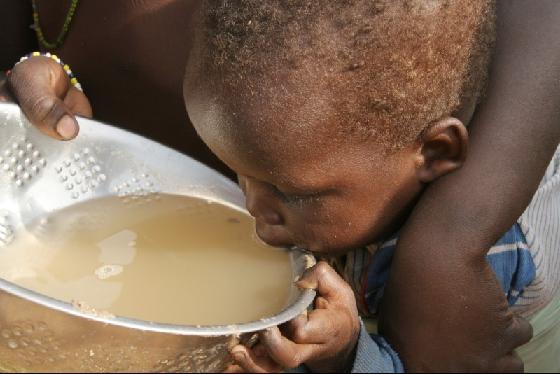
Child drinking unclean water
Many parts of a person are affected by unclean water. Unclean water can cause children to be unable to attend school and parents to be unable to maintain a job. Drinking water gives humans energy to perform their daily functions. If a person gets sick from drinking contaminated water, they are unable to go about their daily tasks. Children are unable to go to school, and parents are unable to work for money. Most of all, drinking unclean water can cause numerous health problems and diseases. According to Water Projects International, 80% of all disease in the world originated from unclean water, poor sanitation, or bad hygiene. Water and sanitation directly links to the health of each and every person. Drinking unclean can cause a person to get Typhoid fever, also called Salmonella Typhi. Typhoid fever can cause birth defects, cancer, and generic damage. From drinking polluted water you can also get Cholera. Cholera affects a person’s intestines. Without immediate medical treatment, a person affect by Cholera could die within 12 hours. A person can also get Trachoma from drinking unclean water. Trachoma irritates the eyes and can cause blindness. Unclean water can also cause a person to get amoebic dysentery. It is an intestine infection that causes severe diarrhea. Schistosomiasis is a disease that is caused by parasitic worms. A person gets infected when their skin comes in contact with contaminated freshwater, where harmful snails live. Crops need clean water to grow. Without clean water for irrigation, crops die, providing families with little to no food to consume.

Children gathering water from a local stream
The UN estimates that Sub-Saharan Africa spends 40 billion hours a year gathering water. That wastes a lot of time. A jerry can, the typical container used to gather water in Africa, weighs over 40 pounds when it is completely full. Children have to walk many miles to an unclean water source to collect water, when instead, they could be going to school. Malalatiana Rosoanisina from Madagascar said, “Twice a I’d have to collect water, it gave me stomach ache as the water was yellow. I couldn't go to school and had to go to the doctor.” Malalatiana would often get sick from drinking dirty water and would have to skip school. Additionally, Malalatiana had to collect water from an unsafe spring. The path leading to that spring was dangerous and slippery. She often fell over and lost water. As a result, she was forced to return to the spring to collect more water for her family. Shilpi Mondal from Bangladesh told the organization WaterAid about her situation, “We collect water from 20-30 km away, usually about once every ten days. We share a boat with our neighbors as we can’t afford our own. This water gives us diarrhea – we know it does – but what else can we do – we have no choice. When I give the water to my daughter I know it will make her ill. It makes me very sad.”
African children using LifeStraws, a portable water filter

Clean water
Many organizations are helping out with this global issue. Such organizations include Water.org, Water Projects International, Blue Planet Network, and Concern Worldwide. These organizations work together with the affected countries to build wells and other water structures. It significantly improves access to water for people, therefore, saving time. WaterisLife.com provides areas with unclean water with water filters, a water filter system for households, and clean water wells. Many organizations are doing their best to tackle this global issue as effectively as they can. However, they can always use help from you!

Ending poverty begins with clean water. Unclean water causes poor health, hunger, and a lack of education. These three things lead to a cycle of poverty.

Deuteronomy 15:11 - There will always be poor people in the land. Therefore I command you to be openhanded toward your fellow Israelites who are poor and needy in your land.

Sites Used:

Tai Po Organic Farm 3

On March 8, 2014, I went to an organic farm in Tai Po again. Turns out, out of those who did sign up for this service, I was the only one that went. But, a lady from the advancement office also joined me, resulting in a total of 3 people that served that day.

First, we attached strings to the bamboo sticks so that the melon plants can grow around that string. The strings were attached vertically. We watered the plants a bit. Seeing that some of the plants did not make it, we removed them and replaced the dead plants with new plants. Afterwards, the Tai Po Organic Farm asked us to help them sweep the boardwalks. I used this big broom that street sweepers use. At first, it was pretty difficult to use because I have never really swept the floor, but I quickly got the hang of it. We would put the swept up leaves, seeds, and rubbish into trash bins. The three of us spread out to different areas of the boardwalk and cleared our areas. In my area, there was a lot of seeds. Compared to sweeping leaves, sweeping the seeds is a lot more difficult. Most of them were lodged between the planks of wood, so when I was sweeping, I had to use a lot of force to get them out. I really like participating in this service. I can connect with the things we do there. The seeds in our life are like sins. God, the sweeper with the broom, forgives us and clears our lives form sins. He doesn't care if we, the boardwalk, have sins lodged so deeply inside our lives, but God will still get rid of those sins if we allow Him to. We were all a bit tired after sweeping the leaves.

After sweeping the leaves, we helped the other plots get rid of the unwanted weeds/plants growing on their plots. I actually like getting rid of those weeds/plants. It's fun. It's satisfying to see the plant and its roots coming out from the ground. In total, the three of us filled a basket with those weeds/plants. Finally, we put fertilizer onto the plants. Honestly, the organic fertilizer did not smell too good. The Tai Po Organic Farm claimed that the fertilizer was made from plant remains, but I'm not too sure. I wasn't too good at pouring the fertilizer on the plants, so I let the others to the rest.

Overall, this was an excellent service opportunity. Although it was a bit awkward at first because I was the only student that helped out, but the lady from the advancement office was very kind and funny. I had a great time and hope to go again before school ends.

Saturday, March 8, 2014

Global Issues - Child Labor

I've decided to expand this blog to also include information on some global issues.

126 million children worldwide are subject to child labor. Child labor refers to the employment of children for work that deprives them of childhood and an opportunity for an education. This harms the children physically, mentally, and socially. Oftentimes, the children subject to child labor do not have a choice. Some have to support their family financially, and others were forced to work for others.


empty
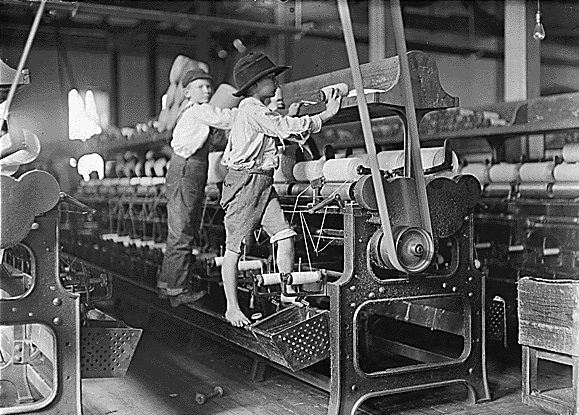
Children operating a spinning machine
During the Industrial Revolution, children as young as the age of six were employed in factories for little to no pay. Oftentimes, the factory owner would get away with not paying them nothing. Sometimes, the children would work up to 19 hours a day, with only a one-hour break in between. Not only were these children subject to long hours of work, but they also worked in dangerous, and often fatal, conditions. Large and heavy equipment surrounds the children as they work. An accident can cause a major injury, and possibly even death. Part of the reason that children were used in factories was because they had more nimble and agile fingers than adults. For example, the children can easily tie tight knots in a carpet industry. The treatment of the children in factories during the Industrial Revolution was often cruel. The people whom the children serve with would often physically or verbally abuse them. Furthermore, punishments such as having to carry a heavy weight on their neck would be given to the children who accidentally mess up when they work. Finally, in 1912, the Children's Bureau made it the US government's responsibility to monitor child labor. Then in 1916, the US Congress was pressured into passing the Keating-Owen Act. This was the first federal child labor law. It prohibited the sale in commerce of goods produced by factories that employed children under the age of 14. However, this act was ruled unconstitutional by the Supreme Court. So, in 1938, President Franklin Roosevelt signed the Fair Labor Standards Act (find out more http://prezi.com/zizqmp0mu35l/fair-labor-standards-act/). This placed limits on many forms of child labor. Any child under the age of 16 is not allowed to work in hazardous conditions. Child labor was a problem in the past, yet it still is a problem today in the present.


Images 20100916 153249 84950
Child trafficking
Currently, there are children involved with trafficking, soldiering, mining and manufacturing. These are all forms of child labor. Child trafficking is also a form of slavery that involves children for exploitation. The children are considered to be merchandise and can be moved from one country to another. Examples of exploitation includes sexual exploitation, forced services, practices similar to slavery, and even the removal of organs for money. Child soldiers are involved in armed political groups. Most of the child soldiers were abducted from their families and forced to become soldiers, but some joined an armed group for a chance of survival. They are used all over the world. An example of a military group is the Lord's Resistant Army (LRA), which is found in Uganda. Child mining is dangerous work for children. Children mine for diamonds, gold, salt, stone, and other other minerals or objects. Children work both above and under ground to find gold. When they work in tunnels, they risk death from explosions and tunnel collapse. The air is filled with dust and sometimes toxic. Additionally, constant exposure to salt is unhealthy for children because salt is corrosive. Children are still involved with the manufacturing business. They face dangerous accidents and are treated cruelly and poorly by their employers. Many children suffer from loss of eyesight, constant back pains, deformation of fingers, and even lung diseases. The experiences of childhood diminished all due to the need for cheap labor. Cadbury used to use African children to gather cocoa beans for their industry. As of 2010, Cadbury no longer uses African child labor in their main chocolate range. Their most popular diary  milk range will also carry a fair trade logo to show ethical company behavior. As people who have freedom, we should use our freedom to help those who don't. Underneath this are some actions you can do to help children subject to child labor.

Child soldier
What you can do:
- Spread awareness to family, friends, and neighbors about this issue
- Sign this petition to help the children of Uzbekistan that are subject to child labor:
   http://www.change.org/petitions/tell-forever-21-to-stop-forced-child-labor-in-cotton
Pray for the children involved in child labor


Sites Used:
http://library.thinkquest.org/trio/TTQ02189/manufacturing.htm

Tai Po Organic Farm 2

On the Saturday of February 22, 2014, I went with another group of students to an organic farm in Tai Po. In total, there were 6 students that signed up for this service. All participants were from my grade. We met together at 9:00 in Tai Wo station. We took the 25K to the village where the organic farm was. We walked a distance to reach the organic farm.

Our school rented a small area for us to plant vegetables. It was an awesome opportunity for all of us. We all received a pair of gloves. First, we had to remove the small unwanted weeds/plants that were growing on our plot. We were given a hoe to help us remove those plants. If we left the plants there, they would take in all the nutrients from the soil away from the plants we are about to grow. This reminds me of the parable of the sower. It is similar to "thorny ground". It still allows the plant to grow, but the "thorns" would take in all the nutrients and eventually, cause the plants to die. In our lives, the weeds are like riches and temptations. It takes all our time and attention away from what really matters, God. Right now, I think my faith is in thorny grounds. I get distracted by all the temptations. That is why we need to remove the things that distract us (weeds). It would allow our faith to grow stronger in Christ.


Afterwards, we loosened the soil. Then we put fertilizer in the soil to help the plants grow. It looked like dark soil. The "fertilizer" in our lives would be anything that helps, not hinders, our faith in Christ. This can include reading the Bible, praying, doing devotions, going to church, listening to Christian lectures or music. We then pushed the soil up to make our plot higher, the soil looser, and to cover up the fertilizer. Then, we put bamboo sticks to guide the bitter melon plants and showing them where they should grow. So, when they grow, they won't grow all over the place, but straight, wrapping around the bamboo stick. In my life, the stick would be God. I need to wrap myself around God and make Him the center of my life. Finally, we removed baby plants from their small containers and planted them in our soil. We planted 3 different kinds of plants: romaine lettuce, bitter melon, and something else. We had to be very careful and not accidentally break or rip the roots or leaves. The plant is like our faith. It is very fragile when it is small and new. But as time passes by, our faith grows larger and stronger, like a plant, and is able to withstand more trials.

This is one of my favorite services. It constantly reminds me of my faith and trust in the Lord as I tend to those plants.

Hebrews 11:1 - Now faith is being sure of what we hope for and certain of what we do not see.

Sunday, March 2, 2014

Tung Wah Food Bank

On February 15, 2014, I went with one other student to help out at Tung Wah Food Bank in Mong Kok. We met up at Mong Kok East train station and took a minibus to an area near the food bank. We had to walk a bit to reach the location. When we arrived, there was a guy that told us what we needed to do. We were to pack and organize food for those who came by to pick up food. People with diabetes or other special conditions would get different amounts and types of food compared to the rest of the people. Examples of food we packed included macaroni, instant noodles, luncheon meat, canned fish, canned beef, corn, canned mushrooms, backed beans, Horlick, Ovaltine, eggs, oatmeal, and milk formula. A lot of food are canned because many of the people who applied to get food either do not have a stove to cook a lot of food or are homeless. The people/families come to collect their food once every week, each time bringing home a week's worth of food. Coupons are also distributed to them to allow them to buy other kinds of food from supermarkets and other stores. After all, eating instant noodles and canned food too often is detrimental to your health. 

When we packed food for the people/families, we first would need to look at this sheet to see how much of each item we needed. Because it was in Cantonese, I had a bit of difficulty with it, but I knew most of the words and I understood it pretty quickly. We would put the food on a cart. With the person/family waiting outside, we would push the cart down into the waiting area and help them put it in the bags they brought. For the first timers, we would provide the bags for them. In total, I think I helped pack food for 6-8 people/families.

When we had time, we helped restock the shelves neatly. We opened cardboard boxes with the help of scissors and took the food out to stack on the shelves. We also organized bags of 2kg rice.

Overall, this service has taught me to be thankful for the food I have. Not everyone is fortunate enough to have enough money to buy good, healthy food for consumption. This service was fun and enjoyable. I am sad to know that they are soon moving somewhere else, but I hope that I can serve in another food bank in the future.

Tuesday, February 11, 2014

February 11, 2014 PPT Presentation Reflection

The gap between the rich and poor is tremendous. The majority of Hong Kong's population lies within the less than $5000 a month. Many of these people live in cage homes.  After listening to Mr. Auty's presentation, it gave me a deeper insight onto the problems Hong Kong faces. Anyone can make a difference, young or old, including me. The purpose of MAD projects is to allow us to use our gifts and blessings to serve the community. I hope that when I go on service experiences, I would open my heart to them and serve them as best as I can.

Saturday, December 7, 2013

English Interview Practice at LMC Primary School


Interviewing LMC Students
After school on Thursday, December 5th, I went with 10 other students to Lui Ming Choi Primary School. We walked to the Shek Mun MTR station and took a bus to the school. We had a little trouble at first figuring out which room we should go into. But after a few minutes, we sorted it out. We split up and went into three rooms, with about four people in each room. I was in a room with Rachel Mok, Jenny Cheung, and Benedict Leung. Because it was our first time, Benedict explained to us what we should do. He told us not to follow the script exactly, but to ask questions that relate to their answer. I settled down in a corner of a room, waiting for students. 

Interviewing the "cute" student
In about a minute, the students started to enter the rooms. I interviewed around five to six students. Some questions/statements I asked them included: tell me about yourself, what would you do if you were the president of China, what do you want to be when you grow up, who is your role model, what is your favorite festival, tell me about a recent news report, what books do you read, and what are your hobbies. I wanted to laugh at some of their responses because sometimes their responses were really off topic. The Lui Ming Choi students gave me a  checklist to grade them when they arrived. I graded each student on their politeness, eye contact, posture, sentence fluency, pronunciation, vocabulary, relevance to my question, and confidence when answering. There was this really cute student that said twice, "I am talented in science." His English was pretty good. Another student I interviewed seemed to have memorized everything by heart. She said something like this, "I am (name). I go to Lui Ming Choi Primary School. I am 11 years old...." She was like reciting facts she has memorized. Three of the students gave a little bow and would not take a seat until I told them to. All of them were so polite. A lot of them seemed pretty nervous. 

In a classroom
When we finished interviewing the students, we split into two groups and went into the students' classrooms to inform them of how they did overall. We each spoke about what they did well and how they could improve. When we finished speaking, the teacher commanded the students to say "thank you" and "goodbye" to us. Yes, commanded. She said, "Stand up!" like an army commander. I think she could have have been a little more gentle. Out of all the services I have done, this is my favorite so far. I really liked interviewing the students. Time flew by as I was interviewing them. I had a lot of fun.